Less than 1%
crystalline silica.
The selected bases offered for this workflow have a crystalline silica content below 1%. Confirm the product reference and its technical documentation when specifying your material.
Original Vitium Technology™
Silica-free mineral bases
<1%crystalline silica
Made primarily from recycled glass and polyester resin.
Cut first. Print later.
Create your chosen marble effect, colour or graphic on a white mineral base that is already cut, shaped and polished.
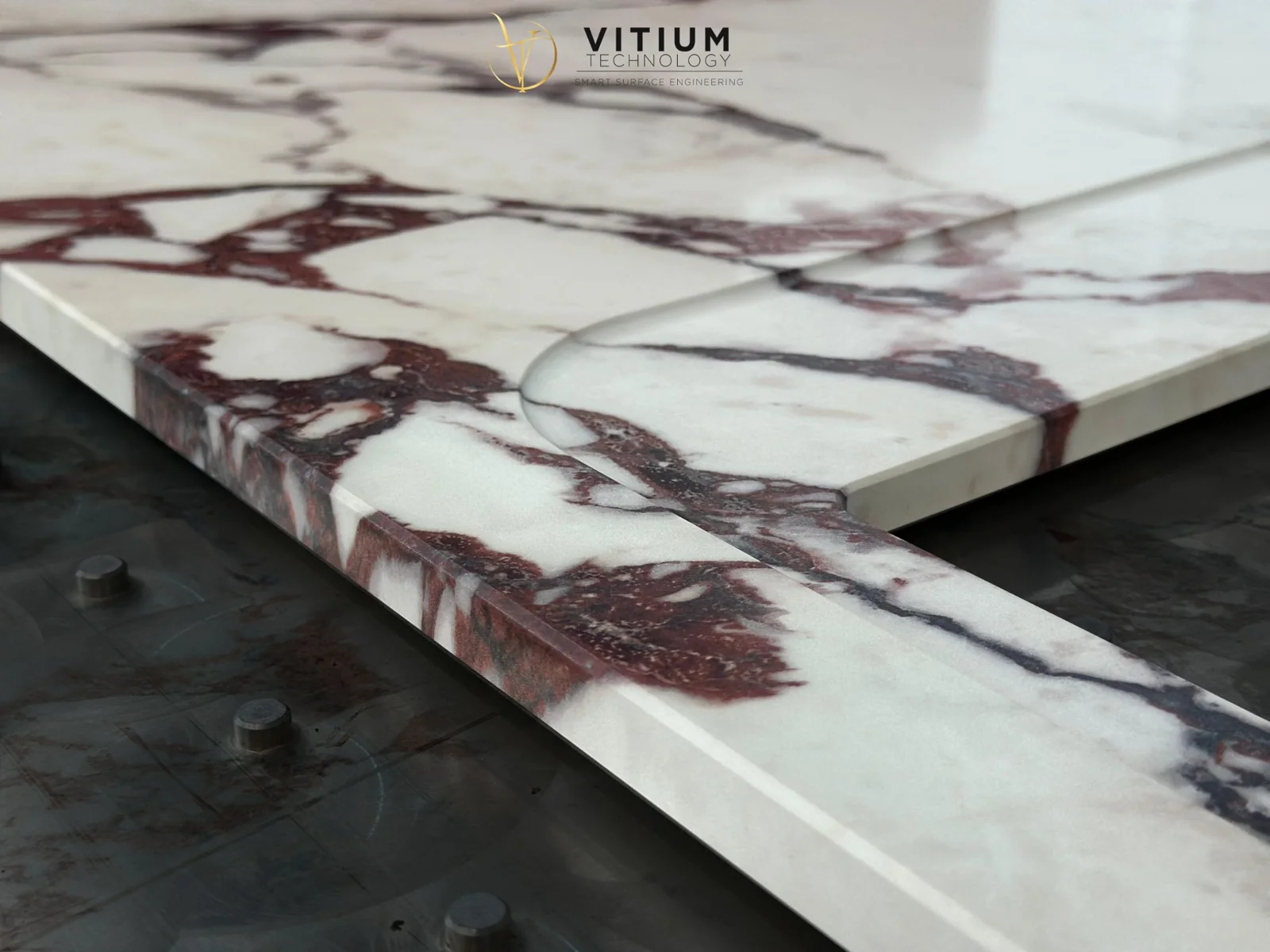
Vitium uses a controlled thermal process under vacuum to transfer the design into a compatible surface, including its edges and worked details.
01Fabricate the piece.Work from a compatible white base.
02Define the design.Plan its scale, position and continuity.
03Transfer under vacuum.Remove the temporary carrier.
Digital quartz printing & mineral surfaces
Vitium personalises compatible mineral surfaces with digital artwork. The design is printed onto a temporary carrier, then transferred into the material using heat and vacuum. The carrier is removed after the cycle.
Watch the real process on YouTube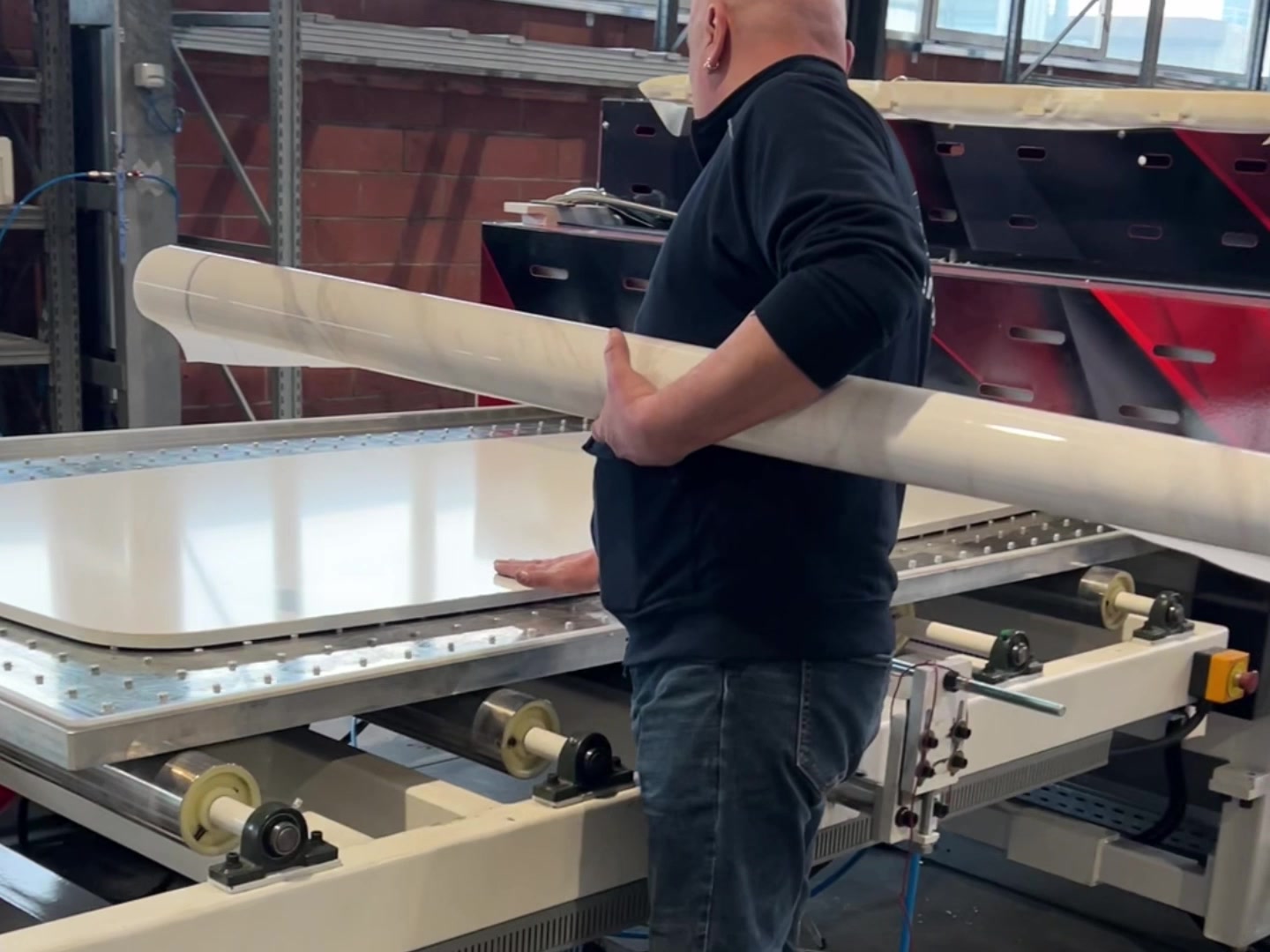
Cut and shape the approved base, complete the required edge work and cut-outs, then prepare and preheat it for the selected process.
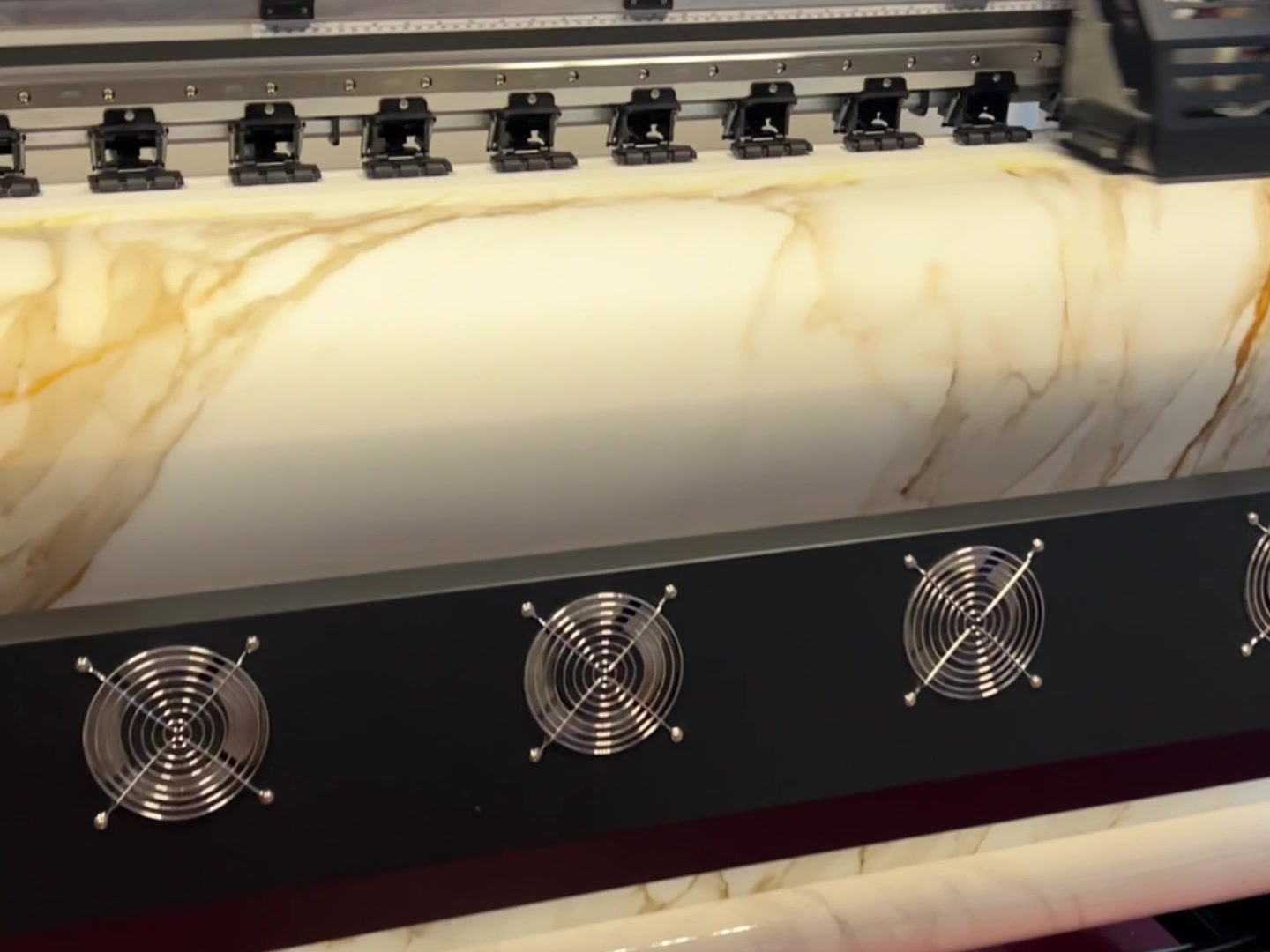
Prepare the graphic for the piece's geometry. Print it onto the temporary carrier using the specified Vitium ink and printing workflow.
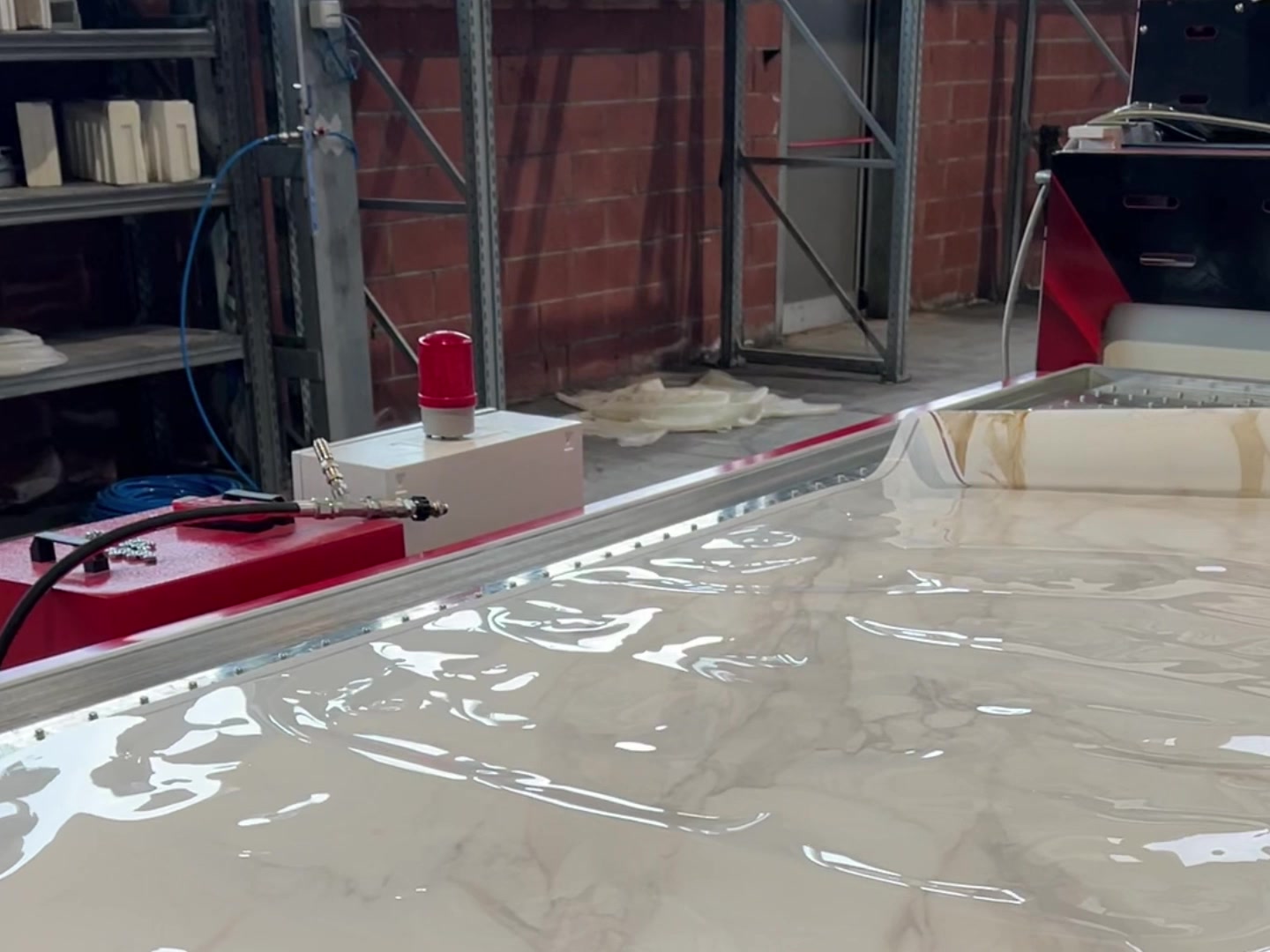
Position the carrier on the prepared piece. Plan the graphic across the top, edge profiles and integrated details before transfer.
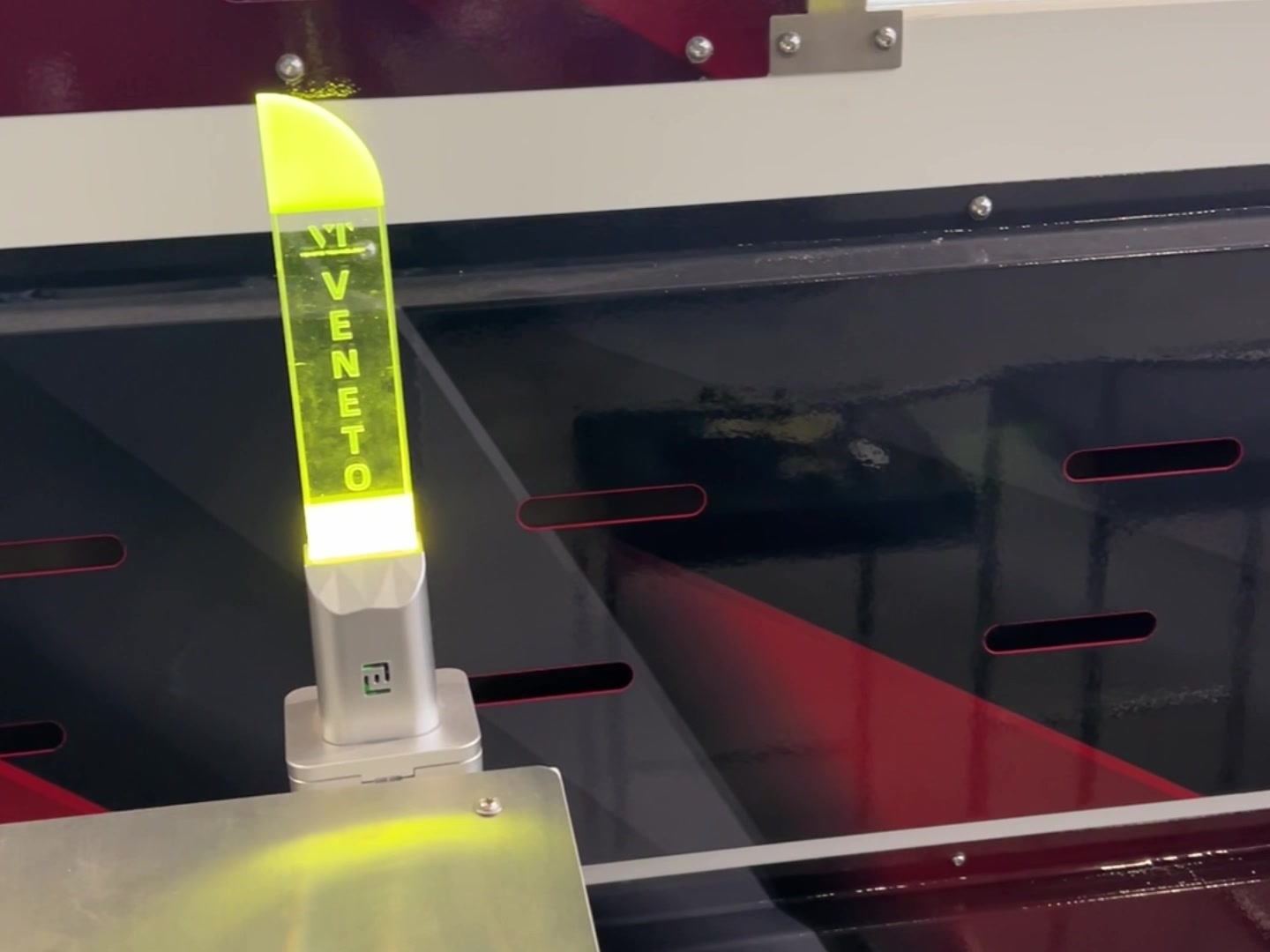
A controlled thermal cycle under vacuum activates sublimation and transfers the design into the compatible surface.
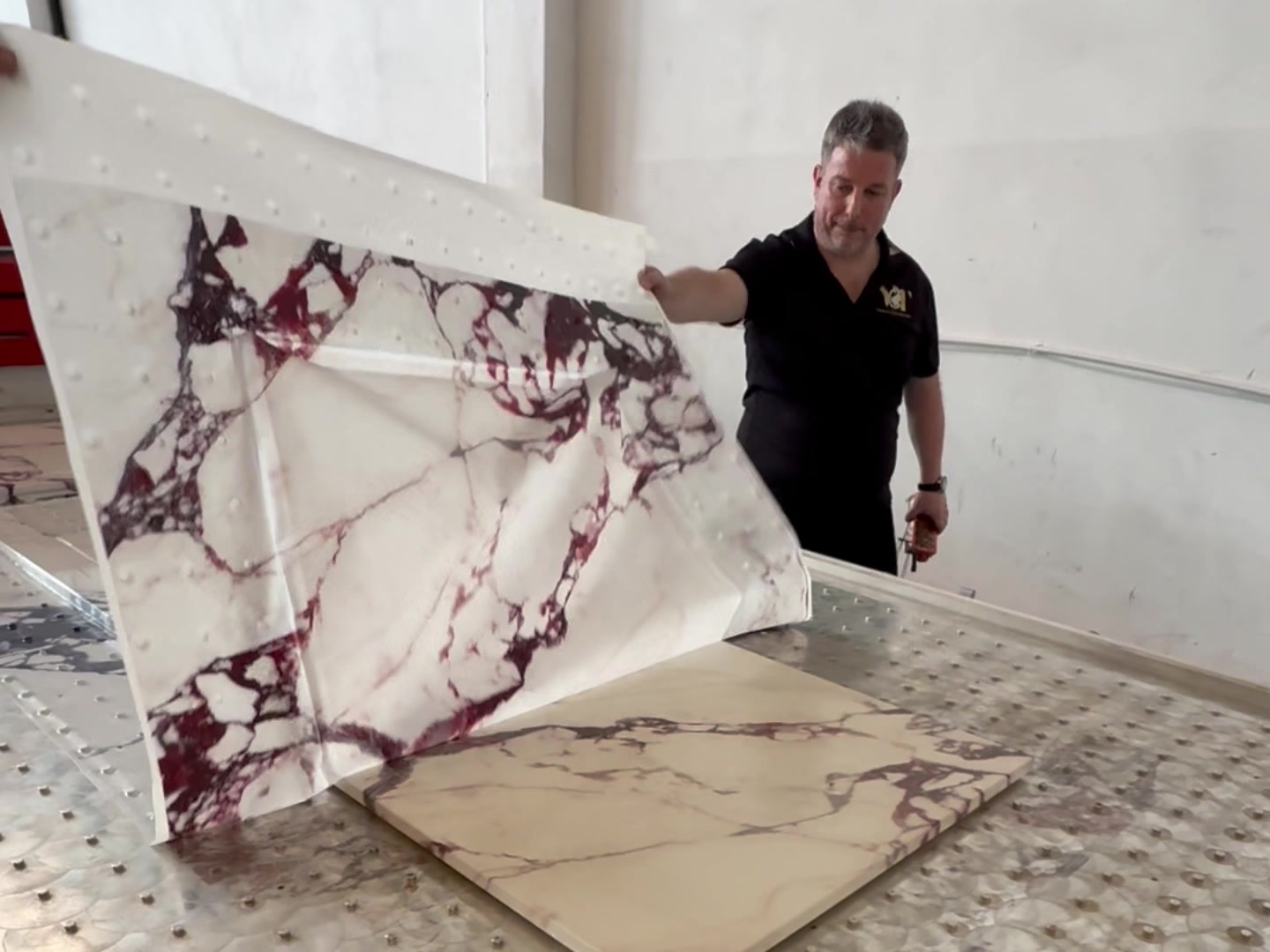
After the transfer cycle, remove the temporary carrier. The printed design remains in the surface; the carrier is taken away.
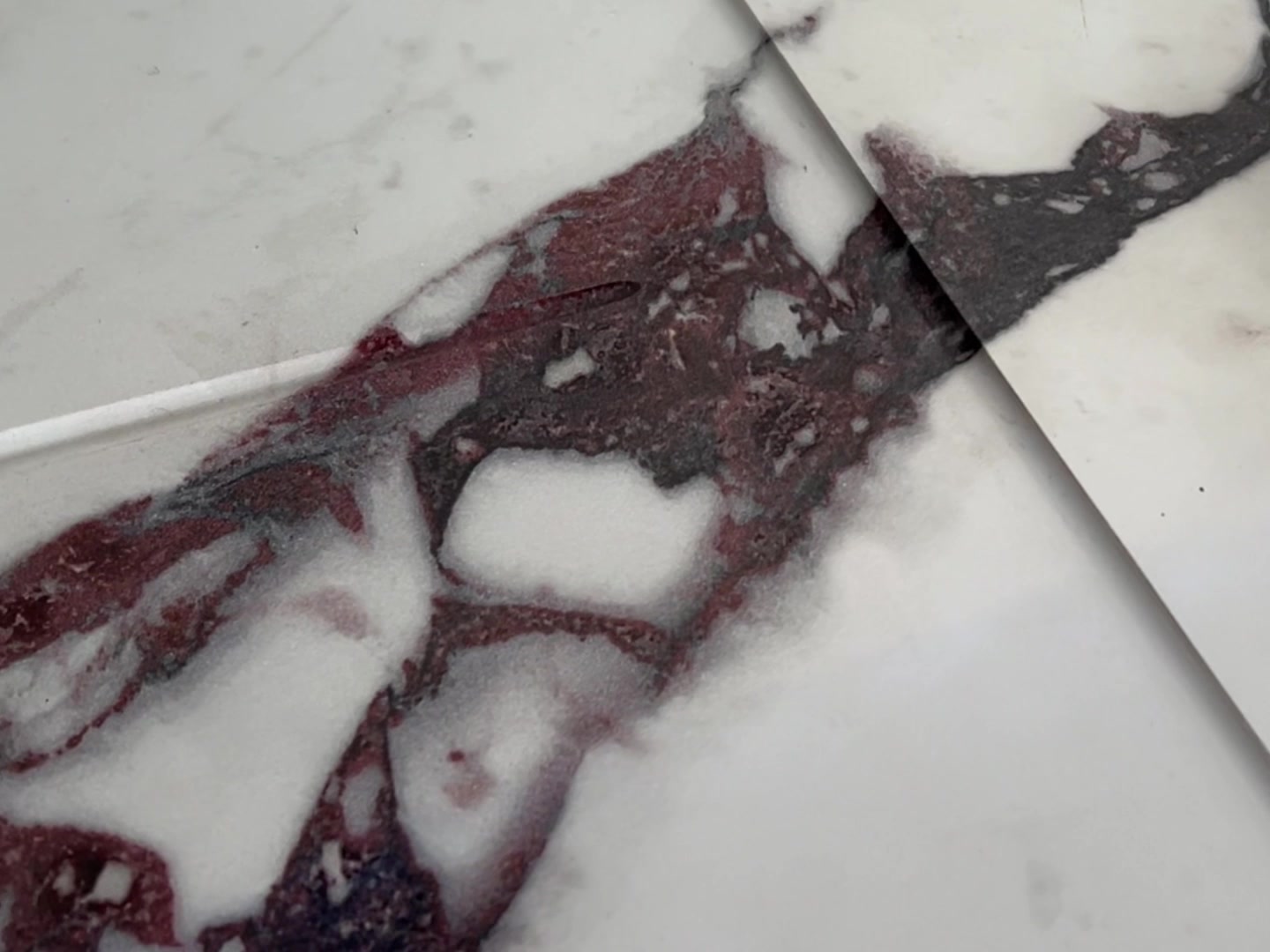
Complete the specified cooling and finishing steps. Check colour, surface quality, edge continuity and the details of the finished piece.
See the transformation
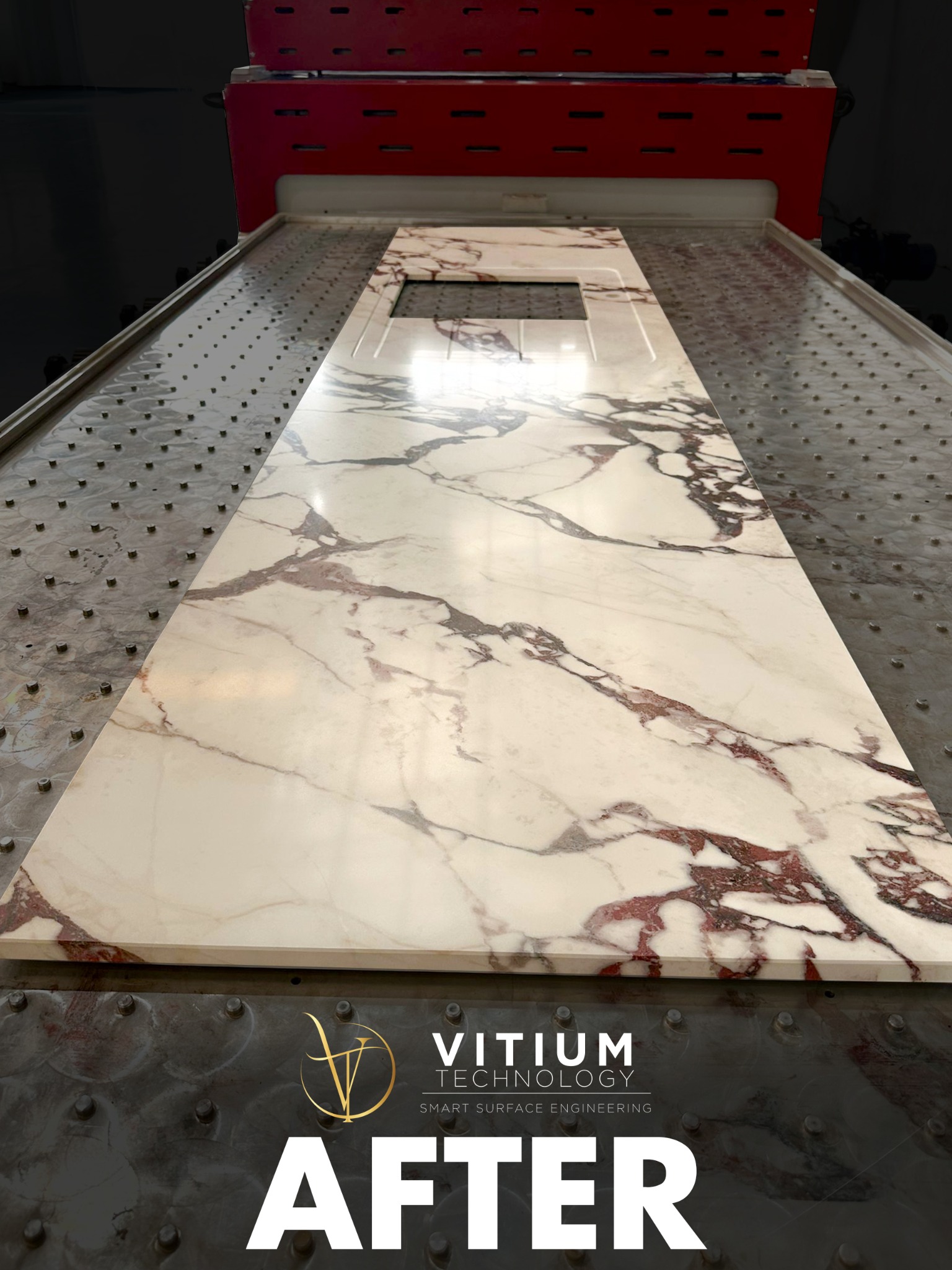
The countertop is fabricated before printing. The design is then developed around its existing shape, so the top and worked edges can share the same visual story.
These photographs show the same white piece before and after the Vitium process.
Explore custom printed countertops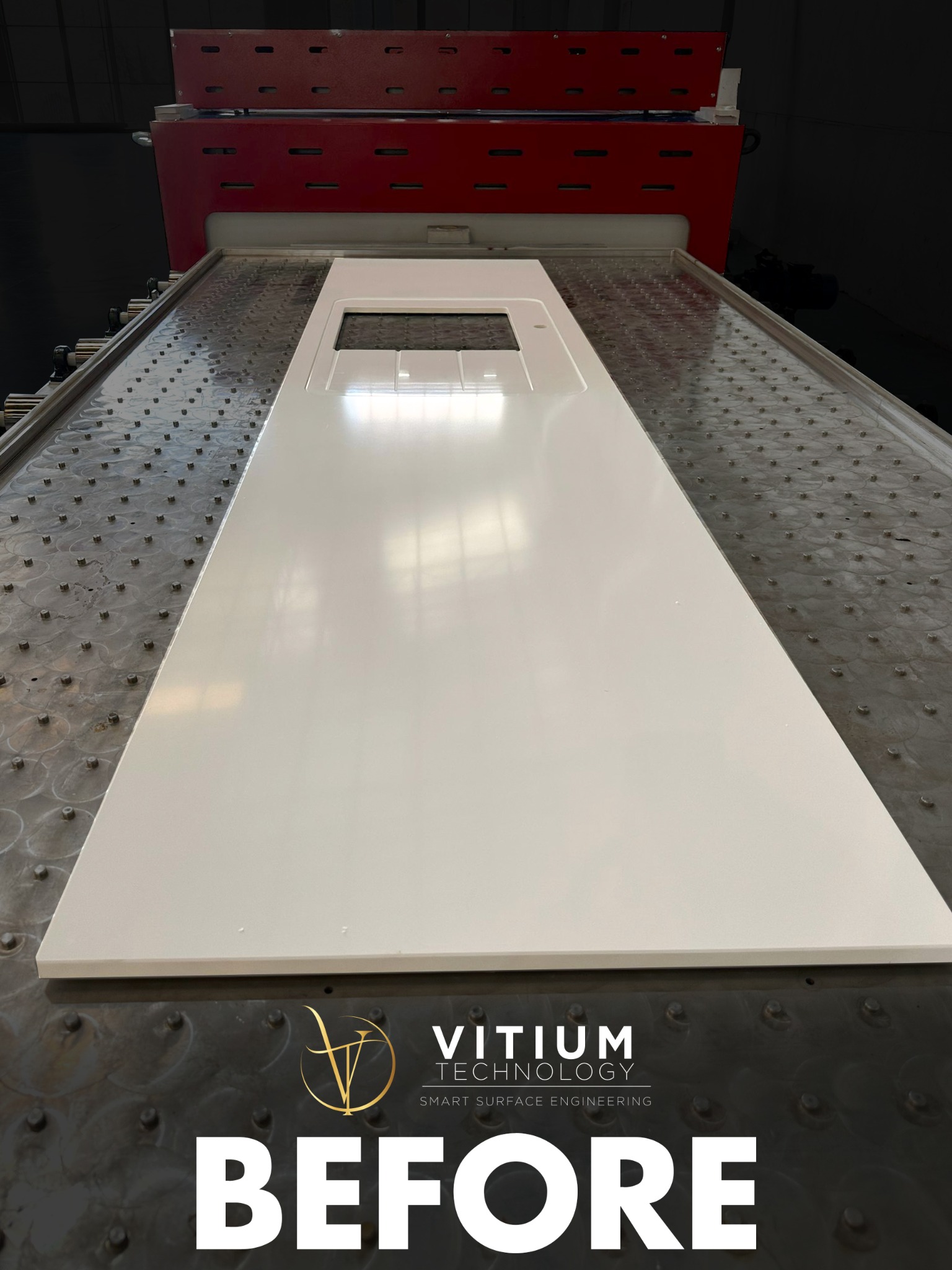
Your mineral base
Our silica-free mineral bases contain less than 1% crystalline silica and are made primarily from recycled glass and polyester resin. Select the exact base and finish together with the Vitium team.
The selected bases offered for this workflow have a crystalline silica content below 1%. Confirm the product reference and its technical documentation when specifying your material.
Recycled glass forms the main mineral component, held together by a polyester resin binder. This glass-based mineral surface provides the white starting point for your personalised design.
Choose the approved base, surface finish and printing workflow together. Vitium then brings marble-inspired veining, custom graphics and visual continuity to the fabricated piece.
Share the manufacturer, product reference, thickness, finish and intended use. Our team can assess the base and define the next steps for a representative printed sample.
The less-than-1% specification refers to the selected silica-free mineral bases, not to every substrate that Vitium can print. Compatibility is confirmed for each material and finish. Ceramic, porcelain and sintered stone are outside the current commercially approved range.
From a sample to production
Choose the base, the design and the finish together.
Assess a representative printed sample for colour, detail and finish. Review the requirements of the intended application with our team, including exposure, cleaning and maintenance.
Performance depends on the complete material and finishing system. Any laboratory results should be read with their sample descriptions, test methods and conditions.
Discuss a sample evaluationChoose your workflow
Start with the kind of work you want to print. Our team will help you assess the system for your pieces, materials and production needs.
Fabricated pieces
For worked pieces such as countertops, cut-outs and integrated elements.
Explore Vitium StarFabricated pieces + whole slabs
For businesses that need to print both fabricated pieces and large, complete slabs.
Explore Vitium HybridQuestions, answered
Vitium personalises compatible engineered mineral surfaces using digital artwork and a controlled thermal transfer process. Our selected silica-free bases are made primarily from recycled glass and polyester resin, with less than 1% crystalline silica. The suitability of any quartz-containing material must be assessed before printing.
The printed carrier is temporary and is removed after transfer. The process transfers the design into the compatible surface. Complete the specified finishing steps for the chosen material.
Vitium creates a design in the surface region and across compatible edge profiles. It does not turn the whole thickness into a through-body pattern. Plan fabrication and graphic placement before printing.
It refers to the selected mineral bases containing less than 1% crystalline silica, made primarily from recycled glass and polyester resin. It does not mean an absolute 0% silica content. Refer to the specific product's technical documentation for its declared composition.
The exact base needs to be confirmed. A white appearance alone does not establish compatibility or crystalline silica content. The formulation, surface finish and thermal behaviour all matter. Vitium printing personalises the selected base; it does not remove silica from it.
These materials are outside the current commercially approved Vitium range. Speak with our team about the selected glass-based mineral surfaces and silica-free bases available for your project.
Vitium is a factory process using dedicated production equipment. A fabricated piece is prepared, printed and finished in the production environment before installation.

Invented by Roberto Cavaliere.
Developed through Veneto Technology.
Vitium's vacuum thermal transfer device is protected by patent applications filed internationally.
Your material. Your design. Your next step.
Explore our silica-free mineral bases and create your own surface identity. Request the material documentation, a printed sample evaluation or a Vitium demonstration.
Talk to the Vitium team